Address
304 North Cardinal
St. Dorchester Center, MA 02124
Work Hours
Monday to Friday: 7AM - 7PM
Weekend: 10AM - 5PM
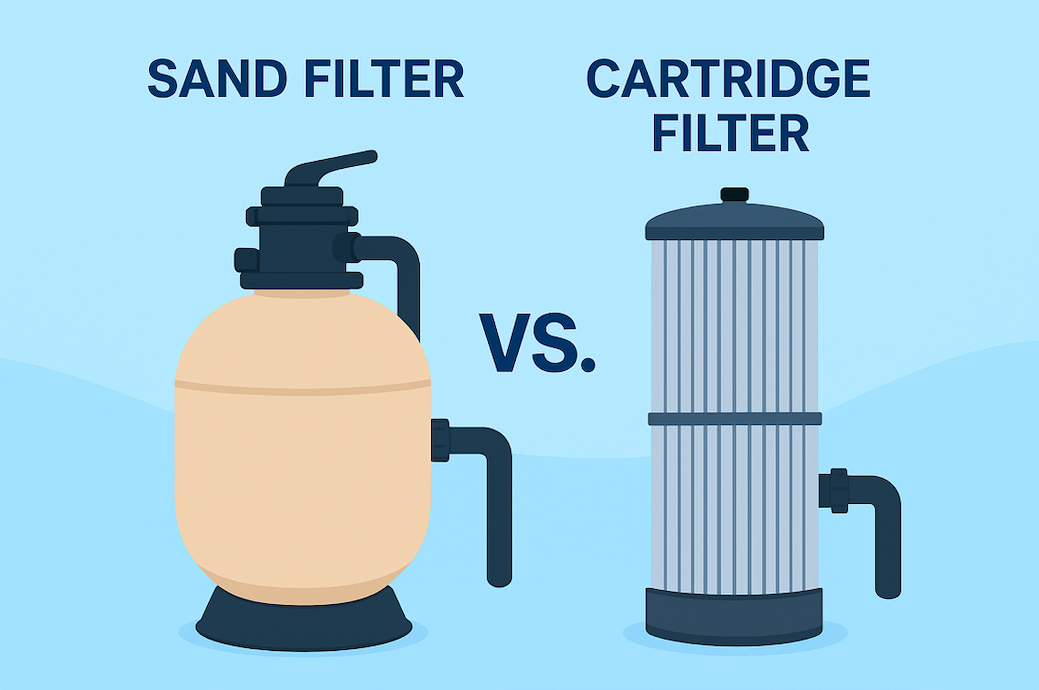
When homeowners think about keeping their pool water clean and sparkling, most imagine chemicals, brushing, or the occasional shock treatment. But behind every clear pool is a hardworking filtration system—quiet, steady, and often overlooked. And when it comes to choosing the right filter, most pool owners find themselves comparing two major options: sand filters and cartridge filters.
Both systems have earned their place in modern pool setups, but they operate very differently and suit different usage patterns, environments, and budgets. In this guide, we’ll break down these two systems in detail so you can confidently choose the one that fits your pool and your lifestyle.
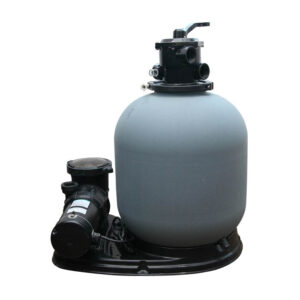
A sand filter is one of the most traditional and widely used filtration systems, found in countless residential and commercial pools around the world. Inside its large tank is a bed of specially graded sand—most commonly silica sand, though many modern systems use glass media or zeolite.
Pool water is pushed by the pump into the top of the sand filter, where it slowly flows downward through the sand bed. Dirt, oils, and debris get trapped between the sand particles. The filtered water then exits from the bottom of the tank and returns to the pool.
Instead of removing the sand, homeowners clean the filter by running water backwards through it. This flushing process—called backwashing—pushes trapped debris out through a waste line. It’s quick, convenient, and usually needed once every 2–4 weeks depending on usage.
Sand filters generally capture particles in the 20–40 micron range. While not as fine as cartridge filtration, this level is more than enough to keep most backyard pools clean and healthy.
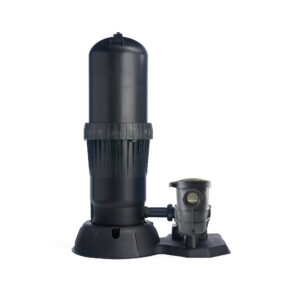
A cartridge filter uses one or more pleated polyester cartridges that trap particles as water passes through them. The pleated design dramatically increases surface area, making cartridge filters highly efficient despite their compact size.
Pool water enters the filter tank and passes through the pleats of the cartridge. Dirt becomes trapped in the folds while clean water flows back out. Over time, debris builds up on the cartridge surface, reducing flow.
Unlike sand filters, cartridge filters don’t need backwashing. When pressure rises (usually every 4–8 weeks), you simply remove the cartridge and rinse it with a garden hose. For deeper cleaning, a soaking solution can be used.
Cartridge filters typically capture particles in the 10–20 micron range—finer than sand filters—giving pool water a clearer, more polished look.
Choosing between the two often comes down to your pool size, location, maintenance habits, and water usage priorities. Here’s a side-by-side comparison:
Sand Filter: 20–40 microns
Cartridge Filter: 10–20 microns
If you want the absolute clearest water, cartridge filters have a performance edge.
Sand Filters: Need regular backwashing and a complete media change every 3–5 years.
Cartridge Filters: Require rinsing every few weeks and cartridge replacement every 1–3 years depending on usage.
Sand filters offer simpler, hands-off cleaning. Cartridge filters require manual rinsing—but less water wasted.
Sand Filters: Use a significant amount of water during backwashing. Also require higher pump pressure, which may slightly increase energy usage.
Cartridge Filters: Very water-efficient, with no backwash required. Lower operating pressure often reduces pump energy use.
For regions with water restrictions or expensive utilities, cartridge filters are the more eco-friendly option.
Sand Filters: Large, heavy tanks that take up more room.
Cartridge Filters: Slimmer, smaller footprint—ideal for tight equipment spaces.
Both systems are long-lasting when maintained properly.
Sand tanks often last 10+ years.
Cartridge filter bodies also last many years, though cartridges themselves require periodic replacement.
Sand Filters: Lower upfront cost. Sand media is inexpensive and long-lasting.
Cartridge Filters: Slightly higher initial price. Cartridge replacement adds recurring cost.
However, cartridge filters may offset their cost through savings in water and electricity.
Choose a Sand Filter If…
You have a large or commercial pool, heavy swimmer load, or want minimal hands-on maintenance.
Choose a Cartridge Filter If…
You manage a residential pool, have limited equipment space, or live in a dry region where water conservation matters.
Pros:
Durable and inexpensive
Easy to clean via backwash
Great for large pools
Handles heavy debris load well
Cons:
Lower filtration precision
Requires backwashing (high water use)
Large footprint
Pros:
Finer filtration for clearer water
No backwashing; saves water
Compact and energy-efficient
Ideal for residential pools
Cons:
Cartridges need manual rinsing
Replacement cartridges cost more over time
Can clog faster in very dirty environments
Here’s a quick decision chart homeowners can follow:
Your pool is large (30,000+ gallons)
You want low-effort cleaning
You don’t mind using extra water for backwashing
Your environment has heavy debris, leaves, or sand
Your pool is medium or small
You want clearer water and finer filtration
You want to reduce water and energy usage
You have limited equipment space
Your region has droughts or water restrictions
At PureBy, we understand that your filtration system is the heart of your pool’s water clarity and health. We design pumps and accessories that work seamlessly with both sand and cartridge filters, ensuring strong, efficient, and balanced water circulation.
Whether you’re building a new system or upgrading an existing one, our team can help you:
size your pump and filter correctly
pair the right filter with your pool environment
maintain long-term clarity with minimal effort
explore energy-saving improvements for your setup
Every pool is unique—your filtration choice should be too. And PureBy is here to guide you every step of the way.
Both sand filters and cartridge filters are excellent options, each with strengths that suit different pools and lifestyles. Sand filters shine in durability and simplicity, while cartridge filters excel in fine filtration and efficiency.
With a clear understanding of how each system works, you can choose the solution that best matches your pool size, your maintenance habits, and your local environment. And if you ever need personalized advice, the PureBy team is ready to help you design a system that keeps your water beautiful all season long.
Enter your email address below and subscribe to our newsletter